Once Upon a Time in Hollywood: How Our Media Consumption Affects Our Dating Lives
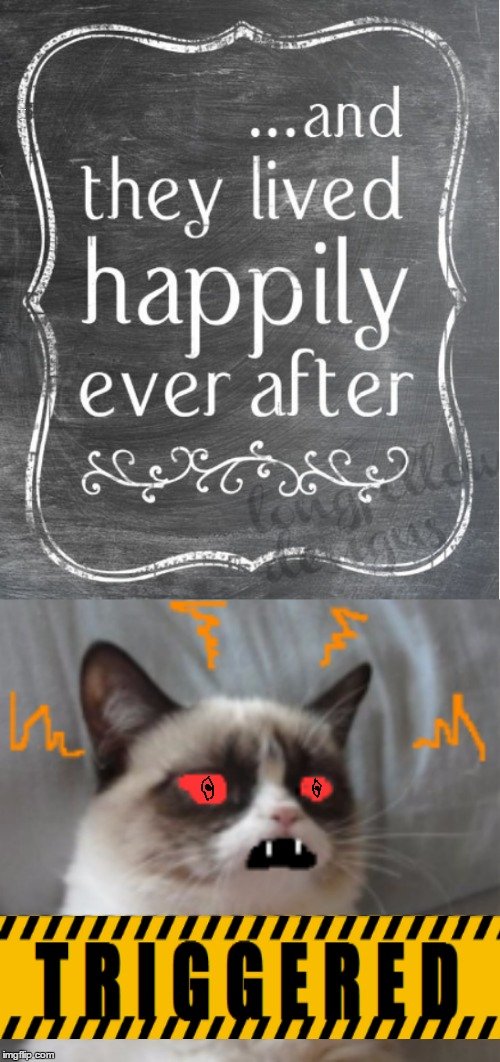
Even Grumpy Cat isn't a fan of unrealistic and destructive expectations in dating
(Meme: https://imgflip.com/i/2501gb)
Whether it’s Disney, sappy romance novels, or cheesy romantic movies: it’s always about how and when he and she find each other. The suspense builds to a climax with a passionate kiss and an optional fairy-tale wedding, followed by the typical narrative à la “and they lived happily ever after”; then the cinematic experience ends with the credits. Okay, great!
This all-or-nothing portrayal of a heteronormative relationship has become ingrained in our expectations when it comes to dating, and that’s not exactly constructive:
Butterflies HAVE TO fly immediatly; otherwise, something's wrong
What does falling in love feel like—or rather: What does our cultural conditioning tell us about how falling in love MUST feel? In our favorite sappy movies, we read about meaningful concepts like love at first sight, soulmates, and fate. One thing is clear: if the feeling of being in love doesn’t set in ultra-fast and ultra-intensely, something’s not quite right. Because that’s how it’s SUPPOSED to feel, right? The short answer is no. The longer answer starts with the fact that these idealized expectations put a lot of pressure on oneself—why don’t I feel like Snow White?—and on the other person as well—why isn’t this person laying the world at my feet, what’s wrong with him or her? Pressure is rarely helpful in social relationships. Instead of chasing after a supposedly mandatory feeling, it’s constructive to focus on compatibility during the getting-to-know-you phase. What do I want, and does that align with what the other person wants? When it becomes clear that quite a few things fit together quite well, the feeling of affection and being in love begins to grow all on its own. Of course, it doesn’t feel exactly like it did for Bella and Edward, but it’s a feeling that has grown out of trust and the certainty that this person is a good match for me. In addition, falling head over heels in love at first sight can (though of course doesn’t have to) be a red flag and an indicator of toxic relationship behavior (e.g., love bombing; see “What Do a Gym Bench, a Satellite, and a Zombie Have in Common? Dating Don’ts”).
Prince and Princess
The typical, fairy-tale couple is straight, white, able-bodied, and conforms to an utterly normative ideal of beauty. Real life is far too diverse and multifaceted for it to be worth letting Hollywood dictate how things should be.
What happens after the credits?
Of course, it’s very convenient to end the storyline right when everything is perfect. Anyone who’s ever been in any kind of social relationship—romantic or otherwise—knows that’s not always how it is, and reality looks different. No relationship in the world consists solely of high points where you walk hand in hand through a flower-filled meadow. There are also difficult situations, but that’s just part of any social relationship. On top of that, working through difficult phases together can strengthen the bond and love in the long run—provided, of course, that being in this relationship feels good and healthy for both people. But if that’s the case, it’s worth facing these phases in a relationship and emerging from them stronger.
